
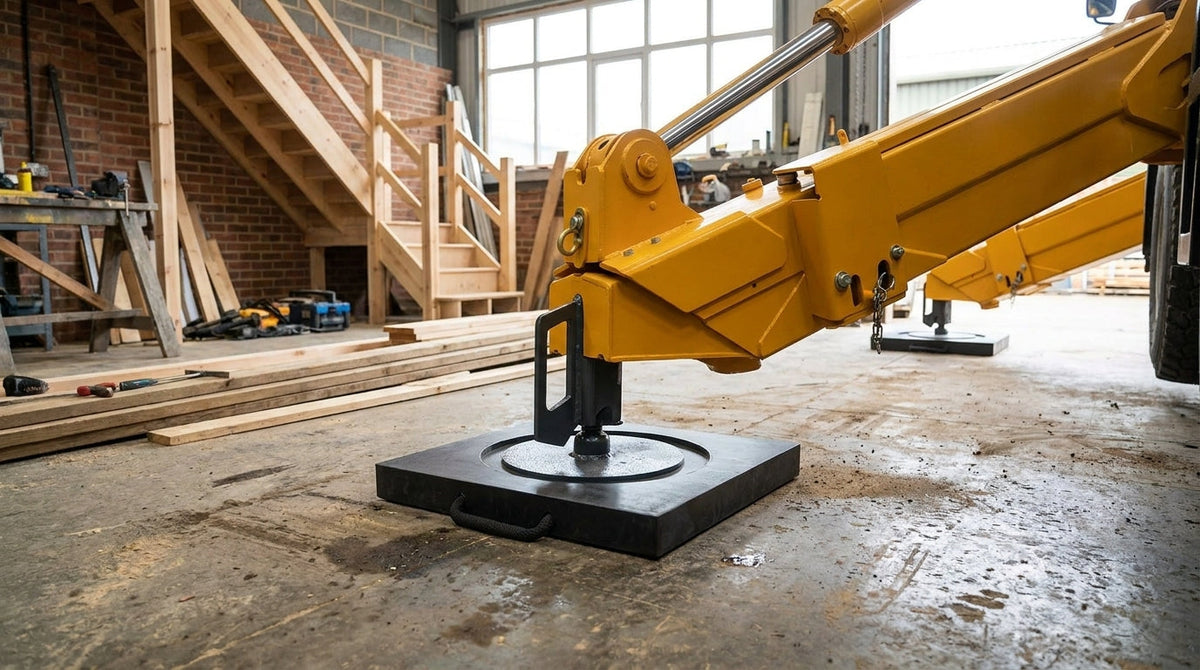
Common Mistakes When Buying Crane Pad: Complete Guide 2024
The most common mistakes when buying crane pad include selecting incorrect weight capacity, choosing the wrong material for ground conditions, ignoring proper sizing requirements, and overlooking surface compatibility that can lead to equipment damage and safety hazards.

What Happens When You Choose the Wrong Weight Capacity?
Underestimating load requirements is the most dangerous mistake. Crane operators often calculate only the crane's weight, forgetting about dynamic loads during lifting operations.
Dynamic forces can exceed static weight by 300% or more. A 12-tonne crane needs pads rated well above 12 tonnes to handle these forces safely.
Using undersized pads leads to cracking, crushing, or complete failure. This damages expensive equipment and creates serious safety risks for workers and bystanders.
Key capacity considerations:
- Static crane weight
- Maximum lift capacity
- Dynamic load factors
- Safety margin (minimum 25%)

Which Materials Work Best for Different Ground Conditions?
Material selection mistakes cost money and compromise safety. Many buyers default to the cheapest option without considering ground conditions or surface requirements.
HMWP (High Molecular Weight Polyethylene) offers excellent strength-to-weight ratios. It resists chemicals, won't splinter like timber, and handles extreme temperatures.
HDPE (High Density Polyethylene) provides non-marking properties crucial for indoor work or sensitive surfaces. It's also highly resistant to impact damage.
Material comparison for common scenarios:
- Concrete surfaces: HDPE for non-marking protection
- Soft ground: HMWP for maximum load distribution
- Chemical environments: Both HMWP and HDPE resist most chemicals
- Cold weather: Polymer materials maintain flexibility unlike timber
How Do You Determine the Right Pad Size?
Size miscalculations create pressure points that damage both the pad and the surface beneath. Too small spreads excessive pressure; too large becomes unwieldy and expensive.
Pad size depends on ground-bearing capacity and total load. Soft ground requires larger surface area to distribute weight effectively.
Standard outrigger foot dimensions also matter. The pad must be significantly larger than the outrigger foot to prevent edge loading and ensure even distribution.
Sizing guidelines:
- Minimum 50mm clearance around outrigger foot
- Larger pads for softer ground conditions
- Consider storage and transport limitations
- Match thickness to load requirements

Why Surface Compatibility Matters More Than You Think?
Ignoring surface compatibility leads to slipping, marking, and structural damage. Different surfaces need different pad characteristics.
Smooth surfaces like polished concrete require pads with textured bottoms to prevent sliding. Delicate surfaces need non-marking materials to avoid permanent stains or scratches.
Abrasive surfaces like rough concrete or asphalt can wear through inferior materials quickly. This creates safety hazards and increases replacement costs.
Surface-specific requirements:
- Smooth surfaces: Textured bottom for grip
- Delicate surfaces: Non-marking materials only
- Abrasive surfaces: High wear-resistance materials
- Uneven surfaces: Flexible materials that conform
What Are the Hidden Costs of Cheap Crane Pads?
Buying cheap pads often costs more long-term. Poor quality materials fail prematurely, requiring frequent replacements and potentially causing equipment damage.
Timber pads seem economical initially but absorb moisture, splinter, and degrade rapidly. Replacement costs and downtime quickly exceed the savings from quality polymer pads.
Insurance and safety considerations add hidden costs. Using inadequate pads can void equipment warranties or insurance coverage if accidents occur.
| Feature | Cheap Timber Pads | Quality Polymer Pads | Long-term Impact | |---------|-------------------|---------------------|------------------| | Initial Cost | Low | Higher | Polymer saves money over time | | Lifespan | 6-12 months | 5-10 years | Less frequent replacement | | Weather Resistance | Poor | Excellent | Consistent performance | | Safety Rating | Variable | Engineered standards | Reduced liability | | Storage Requirements | Large, heavy | Compact, lightweight | Lower transport costs |

Total cost factors to consider:
- Replacement frequency
- Transport and storage costs
- Equipment damage risks
- Insurance implications
- Downtime expenses
Frequently Asked Questions
What weight capacity should I choose for my crane outrigger pads? Choose pads rated at least 25% above your crane's maximum load including dynamic forces. A 10-tonne crane typically needs 15-tonne rated pads to handle lifting stresses safely.
Can I use the same crane pads on different surface types? Yes, high-quality polymer pads work on most surfaces. However, delicate surfaces require non-marking materials, while smooth surfaces may need textured bottoms for better grip.
How long do quality outrigger pads typically last? Premium polymer pads last 5-10 years with proper care. Cheaper materials like timber may need replacement every 6-12 months depending on usage and storage conditions.
What size outrigger pad do I need for soft ground conditions? Soft ground requires larger pads to distribute weight over more surface area. Generally, use pads at least 100mm larger than your outrigger foot in each direction.
Are recessed outrigger pads better than flat pads? Recessed pads center the outrigger automatically and prevent sliding. They're especially valuable on slopes or uneven surfaces where pad movement could create safety hazards.
Bottom Line
Avoiding common mistakes when buying crane pad starts with proper capacity calculation, material selection, and size determination for your specific conditions. Quality polymer pads from Industrial Polymers offer superior durability and safety compared to traditional alternatives. Consider Outrigger Pad HMWP – Lightweight, 5 Tonne Load Capacity for smaller applications or upgrade to higher-capacity options for demanding jobs.