
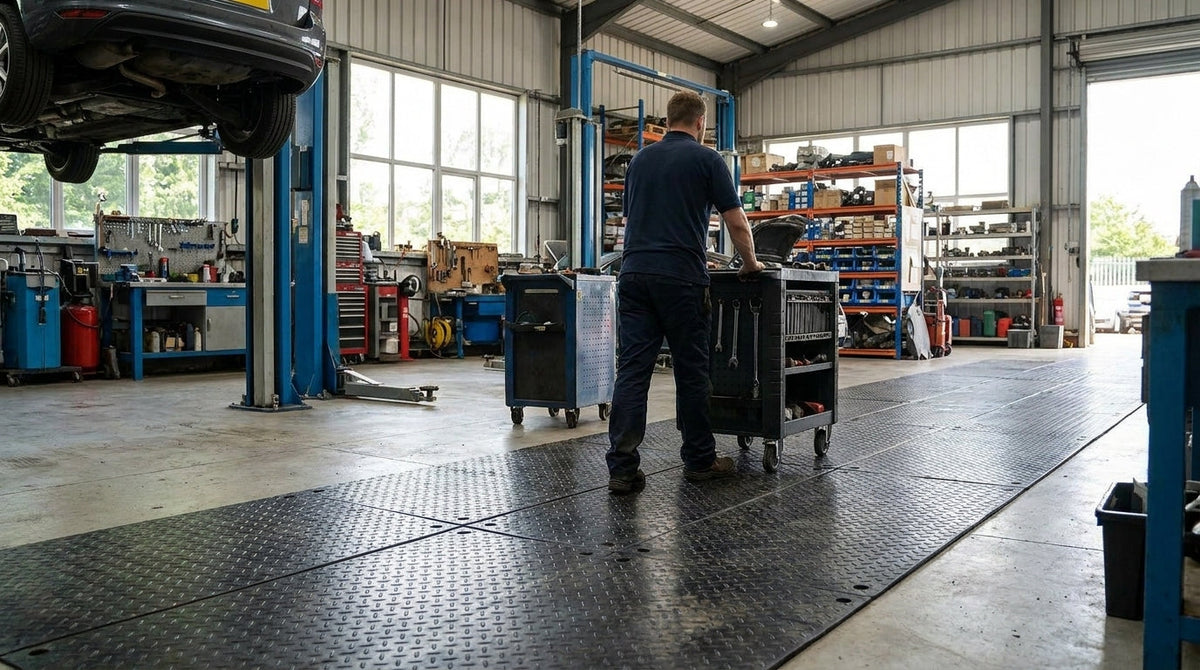
Ultimate Guide to Temporary Road Mats 2024
Temporary road mats are portable panels that create stable access routes and protect ground surfaces from heavy equipment damage. These durable mats distribute weight across soft terrain, prevent rutting, and maintain site access during construction, events, and utility work.

What Are Temporary Road Mats Made From?
Temporary road mats come in three main materials, each with distinct advantages. HDPE (High-Density Polyethylene) mats offer excellent chemical resistance and durability. Steel mats provide maximum load capacity for the heaviest equipment. Composite materials balance strength with lighter weight for easier handling.
HDPE mats resist oil, fuel, and chemical spills common on construction sites. They won't splinter like wood or rust like steel. Premium ChassisGuard™HD Access Mats Recycled HDPE 2400mm x 1200mm Trackway for Heavy Machinery demonstrate this material's reliability for demanding applications.
Composite mats use fiber reinforcement in polymer resins. This combination creates strong panels that one or two workers can move without machinery. The manufacturing process allows for anti-slip surface textures and interlocking edge designs.

How Do You Choose the Right Size Mat?
Mat dimensions depend on equipment weight, ground conditions, and site layout. Standard sizes range from 1200mm x 600mm for light access to 2400mm x 1200mm for heavy machinery. Larger mats distribute weight better but require more handling effort.
Load capacity ratings tell you the maximum safe weight per square meter. Excavators and cranes need mats rated for 100+ tonnes per square meter. Lighter equipment like service vehicles work fine with 50-tonne ratings.
Ground conditions affect sizing decisions significantly. Soft, wet soil needs larger mats to prevent sinking. Rocky or firm surfaces allow smaller mats since the ground provides more support. Heavy Duty Access Panel – Composite, Non-Slip, Man-Handable panels work well where frequent repositioning is needed.
| Mat Type | Typical Size | Load Rating | Best For | |----------|-------------|-------------|----------| | Lightweight PPCP | 600mm x 600mm | 25-50 tonnes/m2 | Pedestrian access, light vehicles | | Heavy Duty HDPE | 2400mm x 1200mm | 100+ tonnes/m2 | Excavators, cranes, drilling rigs | | Composite Panel | 1200mm x 600mm | 75 tonnes/m2 | Medium equipment, frequent moves | | Event Flooring | 966mm x 275mm | 15 tonnes/m2 | Temporary walkways, festivals |
What's the Proper Installation Process?
Installation starts with site preparation and proper mat selection. Clear debris, rocks, and vegetation from the planned route. Level any major dips or mounds that could create stress points under the mats.
Lay mats in a running bond pattern like bricks. This distribution spreads loads more evenly than straight joints. Start from firm ground and work toward softer areas. Overlap joints by at least 150mm where mats don't have interlocking edges.
Temporary Ground Protection Mat – PPCP, Anti-Slip, Heavy Duty options often include connection systems that eliminate gaps between panels.
Secure mats against movement using stakes, sandbags, or mechanical fasteners. High-traffic areas need more anchoring than occasional-use zones. Mark mat edges clearly with cones or barriers to prevent vehicles from driving off the protected surface.

How Much Do Temporary Road Mats Cost?
Purchase prices range from $200-800 per mat depending on size and material. HDPE mats cost more upfront but last longer than alternatives. Composite panels fall in the middle price range with good durability.
Rental rates typically run $15-50 per mat per month. Short-term projects often benefit from renting rather than buying. Long-term sites see better economics with purchase, especially when mats get reused across multiple projects.
Calculate total project costs including delivery, installation labor, and removal. Temporary Ground Mat – PPCP, Anti-Slip, Lightweight Panel - Pack of 4 packages reduce per-unit costs for smaller installations.
Maintenance costs stay low with quality polymer mats. Pressure washing removes mud and debris. UV stabilizers in the material prevent degradation from sun exposure. Proper storage extends mat life significantly.
When Should You Use Event Flooring Instead?
Event flooring serves different needs than heavy-duty road mats. These thinner panels create temporary walkways for pedestrians and light vehicles. Wedding venues, festivals, and outdoor markets use them frequently.
Event panels weigh less and install faster than construction mats. They often feature attractive surfaces that look better in public settings. Temporary Event Flooring – Heavy Duty, Lightweight Polymer - 966mm x 275mm x 27mm demonstrates this application perfectly.
Load requirements help determine when event flooring works versus heavy-duty mats. Pedestrians, wheelchairs, and golf carts work fine on event panels. Delivery trucks, forklifts, and construction equipment need proper road mats.

Frequently Asked Questions
How long do temporary road mats last with regular use? Quality polymer mats last 10-15 years with proper care and rotation. UV stabilizers prevent sun damage while impact-resistant materials handle heavy equipment. Regular cleaning and proper storage extend lifespan significantly.
Can temporary road mats be used on slopes and hills? Most mats work on slopes up to 15-20 degrees when properly secured. Anti-slip surfaces provide traction for vehicles and equipment. Steeper grades may require additional anchoring or specialized grip patterns for safety.
What's the maximum weight temporary road mats can support? Heavy-duty mats support 100+ tonnes per square meter when properly installed on firm ground. Load capacity depends on mat thickness, material type, and ground conditions beneath. Always check manufacturer specifications for your specific application.
Do temporary road mats damage grass and landscaping underneath? Mats protect existing surfaces from vehicle damage but block sunlight and air circulation. Grass may yellow after 2-3 weeks but typically recovers quickly after mat removal. Proper site preparation minimizes long-term impact.
How many mats do I need to cover a specific area? Divide your total area by individual mat coverage, then add 10% for overlaps and waste. A 100 square meter area needs roughly 45-50 standard 2400mm x 1200mm mats including proper overlap for stability.
Bottom Line
Temporary road mats protect ground surfaces while providing stable access for heavy equipment across various terrain conditions. Choose HDPE for maximum durability, composite for balanced performance, or specialized event flooring for lighter applications. Quality Temporary Ground Protection Mat – PPCP, Anti-Slip, Heavy Duty systems pay for themselves through reduced site damage and maintained access. Start with proper sizing calculations and installation techniques for the best results.